

Hey there, welcome to the 43rd edition of Deep Tech Briefing, our Sunday column where we break down the week’s top developments in Deep Tech Startups and Venture Capital.
We’re officially in the holiday homestretch, and this will be the final briefing of the year. Time to wrap things up and recharge for an even bigger 2025. See you on the other side!
Here, you’re reading the free version of The Scenarionist. By upgrading to a Premium Membership, you’ll unlock exclusive access to masterclasses, deep-dive analysis, and actionable insights—everything you need to level up as a deep tech founder, investor, or technologist.

✨ How Can We Help?
Learn from the Best: Join our masterclasses to get ahead in deep tech venture capital. From due diligence and value chains to policy insights and startup case studies, we’ll arm you with the tools you need to succeed. Unlock Premium
Get in Front of the Right People: Reach a global audience of 14,000+ deep tech founders, investors, and operators. Partner with us to showcase your startup, fund, or ideas to a community that’s ready to engage. Learn more.
Showcase Your Startup: Building something groundbreaking? Let us help you share your story and connect with the right partners, investors, and customers. Join us here.
Let’s build the future, together!
Alright, quick recap—what did we dive into today?
🧠 AI: Massive Bets, Strategic Moves, Meta vs. OpenAI, Regulatory Shifts, and the Future of Industrial Automation.
🦾 Robotics: Agility, Figure, and the Rise of Industry-Specific Innovations
🚜 AgriFood: GigaFarms, AI Cattle, and Invisible Fiber
⚡️ Energy: Ambitious Nuclear, Fusion, and Geothermal Projects Face Challenges in Energy Transition Race
🛰️ Space: Contracts, Capital, and the Future of Orbital Security and Exploration
⚛️ Quantum: BlueQubit, SandboxAQ, and the Battle for Technological Dominance
🔋 Batteries: Scaling Smart, Solving Local, and Thriving on Adaptability
🛡️Defense & Security: From No-Code Cybersecurity to China-Free Drones
✨ For more, see Membership | Partnership | Deep Tech Catalyst
🧠 AI: Massive Bets, Strategic Moves, Meta vs. OpenAI, Regulatory Shifts, and the Future of Industrial Automation.
The artificial intelligence (AI) sector continues to churn out headlines that redefine the business and geopolitical landscapes. This week was no exception, with developments spanning massive capital commitments, strategic acquisitions, focused funding initiatives, and regulatory recalibrations. Here’s what caught our attention. Let’s dive in.
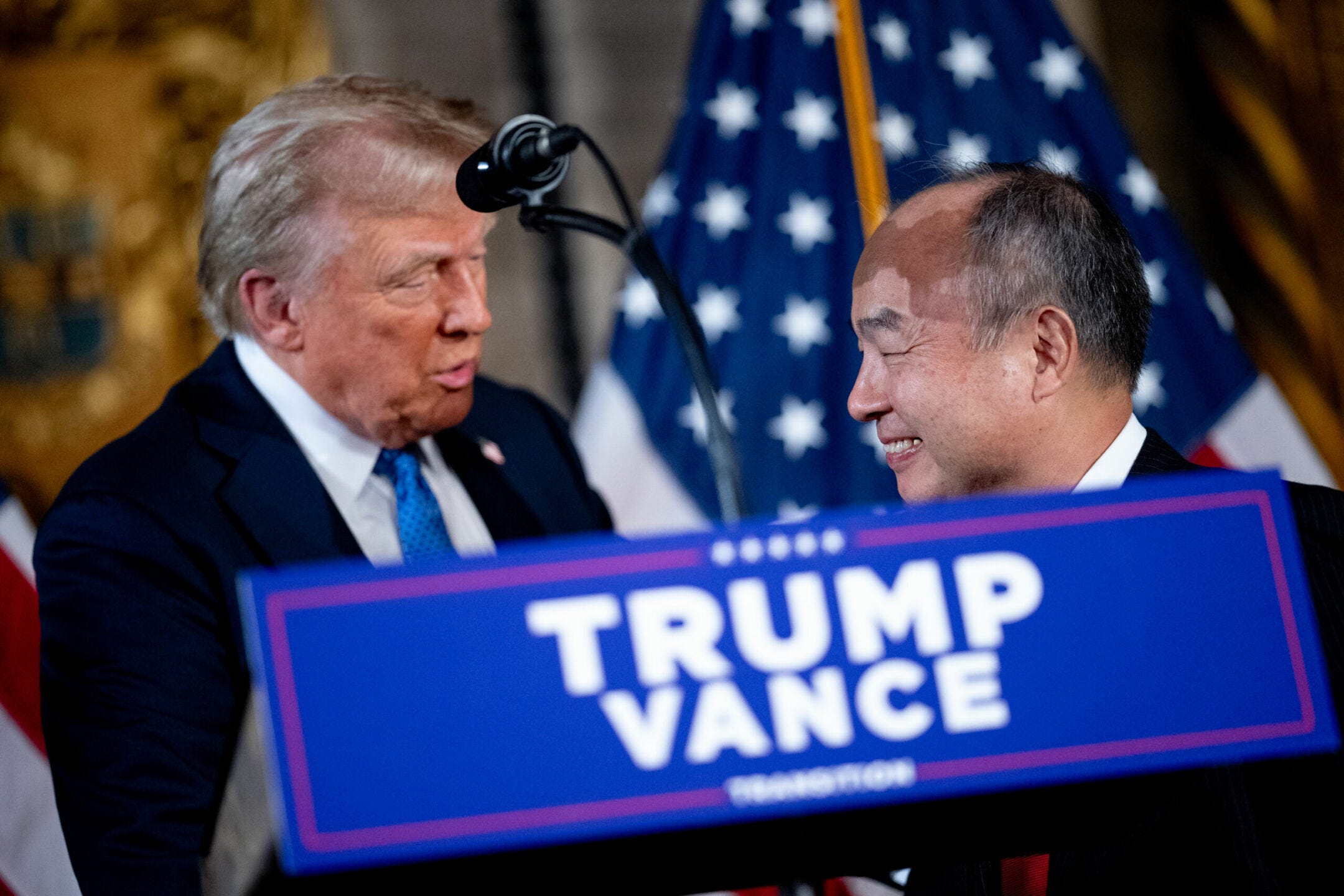
First, SoftBank’s $100 billion pledge to U.S. AI projects is nothing short of audacious. At face value, it’s a reaffirmation of the company’s big-swing strategy, a reminder that Masayoshi Son still sees AI as the axis on which the future will spin. The promise of 100,000 jobs is compelling, but we’ve been here before. SoftBank’s Vision Fund delivered headlines and drama in equal measure, with outsized wins like Coupang offset by WeWork-sized disappointments.
The question isn’t just whether this capital can supercharge AI innovation but whether SoftBank can execute. Google, Microsoft, and other U.S. heavyweights aren’t sitting idle, and this infusion of capital could escalate the talent and infrastructure arms race.
Perplexity’s acquisition of Carbon might not have the flash of a billion-dollar deal, but it’s a chess move worth noting. Enterprise search is quietly becoming one of AI’s most competitive arenas. By integrating Carbon’s retrieval-augmented generation (RAG) capabilities, Perplexity positions itself as a contender against incumbents like OpenAI and Glean. The problem is, this is a space where differentiation is hard and stakes are high. Enterprise customers drowning in unstructured data need precision and privacy, and delivering on both fronts requires not just technical acumen but trust. If Perplexity can get it right, the opportunity is enormous. If not, it risks being swallowed by better-funded competitors.
Databricks’ $10 billion raise, at a $62 billion valuation, is a headline that speaks to more than just investor appetite—it signals the arrival of a new phase for AI infrastructure. With $3 billion in annual revenue and positive cash flow on the horizon, Databricks has what most unicorns lack: maturity.
But this isn’t just a Databricks story. It’s a reflection of how capital is pooling in AI while leaving other sectors parched. The concentration of funding in AI is a double-edged sword: it accelerates innovation but also sets the stage for bubbles. For now, Databricks is the bellwether, and all eyes are on its next move—an IPO, perhaps, in 2025?
On the industrial side, T-robotics is a quieter story but no less significant. With $5.4 million in seed funding, the company is tackling a problem that’s plagued automation for decades: the complexity of programming industrial robots. Their ActGPT platform leverages natural language and pre-trained skills to unlock the potential of underutilized robotic arms, a $30 billion market that’s ripe for reinvention. Winning ABB’s AI Startup Challenge is a strong signal, but scaling in a space dominated by players like Siemens and Nvidia is a Herculean task. T-robotics is a bet on execution, not just potential, but if it delivers, the upside is transformative.
In the automotive realm, Synopsys and SiMa.ai are betting on the next wave of mobility: energy-efficient AI chips for electric vehicles. It’s a timely play. EVs demand more from their chips—ADAS systems, voice assistants, and other advanced functionalities—but they also demand less power consumption. The partnership’s goal of adapting data center-level AI capabilities for in-car environments could redefine what’s possible in automotive AI. The timeline is aggressive—voice assistants integrated into vehicles within three years—but the stakes are clear: whoever masters efficiency without sacrificing performance wins the race.

Meanwhile, the Anthology Fund is showing what disciplined, targeted investing can look like in a space often characterized by excess. Menlo Ventures and Anthropic have deployed $100 million into 18 startups in just five months, focusing on applications that bridge foundational AI and real-world needs. From fintech compliance to radiology, these startups are tackling problems with tangible, near-term impacts. Anthology isn’t chasing moonshots—it’s funding builders, and in a world increasingly crowded with noise, that clarity of focus is refreshing.
Finally, the global regulatory landscape continues to shift. The Netherlands’ decision to expand investment screening to include AI underscores how national security is becoming intertwined with technological oversight. China’s establishment of an AI standards committee is equally revealing—it’s not just about competing in AI but about writing the rules that others follow. For companies operating across jurisdictions, this fragmentation poses challenges. Balancing agility with compliance will be a defining test for global players in the coming years.
And then there’s Meta’s challenge to OpenAI’s shift from nonprofit to for-profit. At its core, this isn’t just a legal battle—it’s a philosophical one. OpenAI’s pivot highlights the tension between the promise of AI for public good and the profit motives that inevitably emerge as technologies scale. How this plays out could set precedents for future AI governance and funding models.
Taken together, this week’s stories paint a picture of an industry on the edge of extraordinary growth but also grappling with foundational questions of scale, governance, and sustainability. For those watching—and investing—the lesson is clear: focus on fundamentals, bet on builders, and don’t lose sight of the long game.
🦾 Robotics: Agility, Figure, and the Rise of Industry-Specific Innovations
This week’s robotics headlines underline a sector buzzing with momentum—some big moves in funding, a few eyebrow-raising announcements, and plenty of clues about where the industry is headed. Let’s dig in.
Start with Slip Robotics, an Atlanta-based disruptor redefining logistics. They’ve just raised $28 million in Series B funding, positioning their SlipBots to revolutionize truck-loading. These bots reduce the time needed to fill a trailer from an hour to just five minutes.
For companies like John Deere and Nissan, already onboard with Slip’s RaaS (robotics-as-a-service) model, this isn’t just about efficiency; it’s about rethinking the entire supply chain. With logistics automation poised to hit $30 billion by 2030, Slip’s approach signals a paradigm shift that competitors like Fetch Robotics can’t ignore.
Meanwhile, Colin Angle, the mastermind behind the Roomba, is betting big on the next frontier of consumer robotics. His new venture, Familiar Machines & Magic, has secured $15 million toward a $30 million goal to develop robots focused on health and wellness. Consumer robotics has a tough track record—Jibo and Cozmo come to mind—but the potential market, projected at $24.5 billion by 2028, is too enticing to dismiss. Angle’s pedigree gives him a solid foundation, but carving out a niche in this crowded field will require more than nostalgia for the Roomba days.

In manufacturing, Singapore’s Eureka Robotics landed $10.5 million in Series A funding.